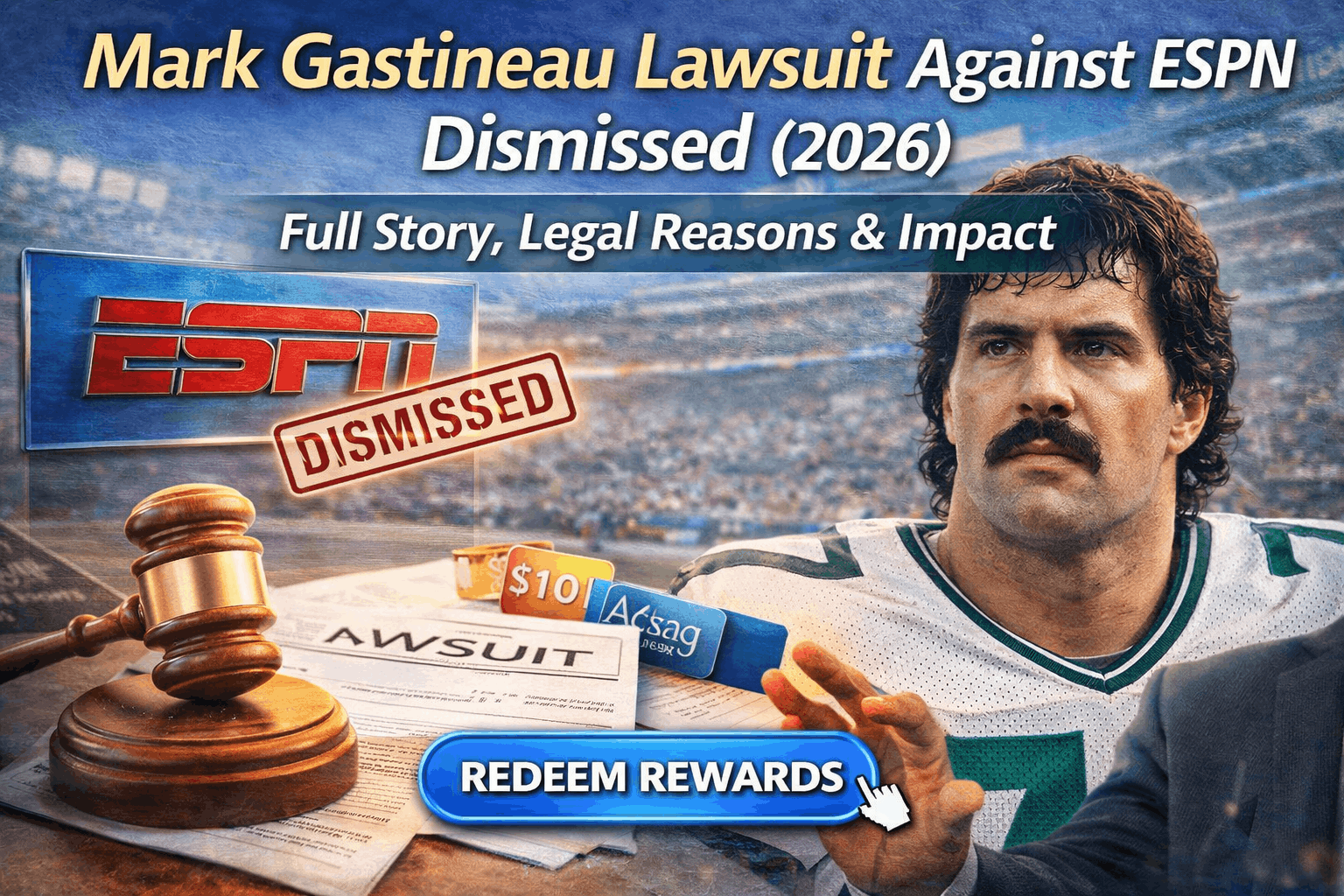
Former NFL defensive star Mark Gastineau’s legal battle with ESPN has officially come to a halt after a U.S. federal judge dismissed his $25 million lawsuit. The case, which centered around a controversial documentary scene, highlights important legal principles around media rights and public figures.
📰 Quick Summary
- ✔️ Mark Gastineau sued ESPN for $25 million
- ✔️ Lawsuit related to a 30 for 30 documentary
- ✔️ Case dismissed with prejudice (cannot be refiled)
- ✔️ ESPN wins; Gastineau may still appeal
⚖️ Why Was the Lawsuit Dismissed?
The court ruled in favor of ESPN based on several key legal findings:
1. Signed Consent Agreement
Gastineau had signed a release granting ESPN permission to use his name, image, and likeness.
This agreement played a major role in the court’s decision.
2. Newsworthy Content Protection
The documentary covered real events in NFL history. Courts generally protect such content under freedom of expression and journalism rights.
3. No Strong Defamation Claim
Gastineau argued that editing made him look aggressive and damaged his reputation.
However, the judge found that:
- The portrayal did not meet the legal definition of defamation
- ESPN did not violate any enforceable rights
🎥 What Sparked the Lawsuit?
The issue came from ESPN’s 30 for 30 documentary:
👉 “The New York Sack Exchange”
A scene showed Gastineau confronting Brett Favre about a controversial sack record moment from 2001.
Gastineau’s Claims:
- The scene was edited unfairly
- It portrayed him negatively
- It harmed his public image
ESPN’s Defense:
- The footage was accurate
- It was relevant to the story
- It fell within editorial rights
📘 What Does “Dismissed With Prejudice” Mean?
This legal term is important for understanding the outcome:
- Case closed permanently (same claims cannot be filed again)
- Prevents repeated lawsuits on the same issue
- Still allows for an appeal in a higher court
📊 Impact of the Decision
This case has broader implications beyond sports:
For Media Companies
- Reinforces strong legal protection for documentaries
- Confirms importance of signed release agreements
For Public Figures
- Shows limits of legal action over edited content
- Highlights the importance of understanding contracts
🔍 Key Takeaways
- ESPN had legal permission to use Gastineau’s footage
- Courts protect newsworthy storytelling
- Defamation claims require strong proof—not just negative portrayal
- Signed agreements can override many disputes
Final Understanding the Case
The dismissal of Mark Gastineau’s lawsuit against ESPN underscores how powerful media rights and legal agreements can be. While Gastineau may still pursue an appeal, the ruling sets a clear precedent for how similar disputes may be handled in the future.
For fans, it’s a reminder that even behind sports documentaries, there are complex legal and personal stories unfolding.